By : Nisha Setia
Content Writer at ARK Foundations.

Sunday, August 30, 2020

Technology Addiction: A Stigma for the World

 What would happen if someone snuck in during the night and took away all your technological products from your life forever? Just to be clear, it's not very likely to happen, hypothetically speaking. But if it did somehow happen, how would you react to it? Well, some of you might get anxious and there would be some panic and chaos. Others might feel like it's the end of their lives to some extent. From communication to entertainment, business to travelling, everything will come to a halt.


Humans are now considering technology as a part and parcel of their lives. Many among them have started using it excessively. The growing use of technology has given rise to a new type of addiction known as "technology addiction". With people turning more and more to technology, the chances of them getting addicted to it are also increasing. Technology is like a drug to your body. Just as drugs affect your physical and mental health, so does technology. But what exactly is technology addiction? Is it possible to prevent it? Is it even real? Let's dig deeper to find answers.


What is technology addiction?


Technology addiction refers to the overdependence on technology equipment which leads to the obsessive tech-related behaviour in the users. It is the inability to control the use of technology, especially the Internet, social networking sites, mobile phones, televisions, and video games. 


Technology is an addiction because in some cases it causes more harm than good to its users. Even if one would want to stop, it causes some withdrawal symptoms, and can lead to several dire consequences.


What are the signs and symptoms of technology addiction?


How do you recognize whether a person is a technology addict? Here is a list of some signs to watch for.


A technology addict:


• Feels restless or irritable if someone attempts to cut down the internet connection.

• Feels drawn towards the internet, mobile phones, or other technology-driven things.

• Stays online longer than usual.

• Becomes socially isolated and experiences depression and anxiety.

• Has poor hygiene and doesn't pay much heed towards her/his health.

• Ignores what is happening in real time, instead remain immersed in the virtual world.

• Loses sense of time while using technology.

• Withdraws from offline activities that were once pleasurable.

• Lies to family members regarding the extent of involvement with technology.

• Has constant neck pain, headaches, and red eyes.


Is technology addiction a real addiction?


Medical experts around the world have raised concerns about more people drawing towards their digital devices. Now addiction experts believe it's easier to treat a drug addict than a technology addict. Drug addicts can be treated by giving a proper medical treatment. While on the contrary, it is a difficult task to help tech addicts reduce their screen time. Just as drug addicts are unable to live without drugs or tobacco, similarly tech addicts also struggle to survive without checking their smartphones or computers. They are unable to distinguish between the virtual world and the real world. Aggression, depression, and anxiety can be easily seen in such addicts.


Tech addicts are not much different from other kinds of addicts. So it can be rightly said that addiction to technology is as serious as any other addiction. It indeed is a real addiction.


Which age group is more vulnerable to technology addiction?


Adolescents or teenagers are more susceptible to technology addiction. For them, technology is like a key to escape from real world challenges. They are turning more towards technology because the relaxation they get from the virtual world is nowhere in reality. Peer pressure, emotions, socialization are some of the other reasons why teenagers stay glued to their digital devices. 


The amount of time teenagers spend on the screens is increasing at a fast pace. It's not unusual for a teenager to turn on the TV and computer and start watching a TV show with one eye, while playing a game on the computer with another, somehow managing to text on a mobile phone as well. Needless to say, nowadays teenagers' lives revolve around technology. And video games like PUBG add fuel to the fire. Such video games are highly addictive since they provide real time gaming experiences. Now, teenagers think about bridge camping rather than their assignments. 


Teenagers are more vulnerable among other individuals. While playing such games, their expectations for gaining rewards increase. It leads to the release of dopamine and some other feel-good hormones. In turn, this craving for rewards grows and they try to get the same effect. In this age group, their brains are highly manipulative and anything they do becomes their habit sometimes. Unknowingly, they fall prey to technology addiction.


For most parents, technology addiction among their teens has become a growing concern. But finding a balance for them can do wonders.


How is technology addiction prevented?


When excessive use of technology begins to affect a user's mental and physical health, daily life, job or academic performance, and relationships, it may be time to seek help or guidance.


Here is a list of some options to prevent technology addiction:


• Engage in some recreational activities like sports, yoga, or even just getting good sleep.

• Avoid use of some applications and social networking sites.

• Educate teens and young adults about the negative impacts of technology.

• Seek family counselling.

• Socialize-in-person with friends or relatives.

• Get enrolled in a support group.

• Maintain a good standard of hygiene.

• If the problem still persists consider some treatment options, such as Reality Therapy (RT), Cognitive Behavioural Therapy (CBT), and Equine Therapy (ET)


Wrap-up


Excessive use of technology has the potential to become addictive and sometimes with dreadful consequences. People must keep a check on the amount of time they spend on using any digital device. Technology has been developed for reaping benefits and not something to grow addicted to.


Are you also a technology addict?


Friday, August 14, 2020

Know the Unreal World of Virtual Reality

Is it possible to create an illusory environment that can make your mind believe it is real? Can you think of experiencing something that appears to be real but is not exactly real? Believe it or not, you can experience something like this. But how? Well, this can be achieved with the help of technology known as "Virtual Reality". But what exactly is virtual reality? To find answers, let's dive into the world of this wonderful technology.


What is Virtual Reality?


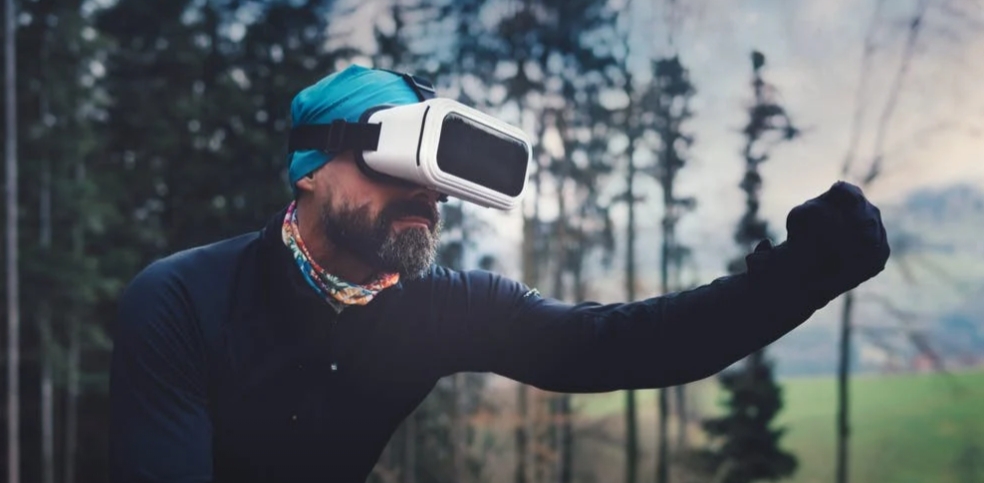
Virtual Reality or VR refers to the three dimensional (3D) or computer-generated environment where the users can walk through and perform a series of actions. VR enables its users to handle and manipulate virtual objects or scenes that seem real. 


In other words, VR is a technology by which an immersive illusion can be created. It allows users to feel like they are physically present in the virtual world-- a world that doesn't exist in reality. With this technology, one can explore & experience the virtual world being generated by the computer. 


Now let us give you a brief history of virtual reality.


What is the history of VR?


Although it seems like the concept of VR is something new, this technology has roots in development several hundred years ago. The history of VR dates back to the 1800s when the first stereoscope was invented. Viewing images or photos through a stereoscope gave a sense of depth and immersion. This device was the first of its kind in the history of VR. But, later it developed into the View-Master in 1939. And it is still being produced today.


In the 1960s, a few scientists such as Heilig, Sutherland, etc. attempted to develop a head-mounting gear by which wearers could have a look at the 3d generated computer graphics. Of those scientists, Ivan Sutherland suggested it would serve as a window to the virtual world.


However, the term 'Virtual Reality' made its debut in the mid 1980s when the founder of VPL Research, Jaron Lanier, began working on 'gear' which also consisted of gloves and goggles. He believed the wearer could experience what is now known as virtual reality.


A few years later, in the early 1990s, Sega VR headset was designed for gaming, but it never made it into the market. Later, Virtuality produced the first VR game that gave its users a real-time gaming experience. Over the years, this technology saw many advancements, from VR headset Oculus Rift to Project Morpheus, Gear VR to Vive, and many more. Now, people have the ability to use and try VR practically. Today, various high-quality devices are easily accessible. Thanks to the pioneering inventors.


What equipment are used for Virtual Reality?


While the experiences gained by using this technology can be unbelievable to consumers, non installment of proper equipment might ruin their impression and experience. Hence, proper equipment is essential to have a good experience of virtual reality. Various kinds of equipment are used such as hardware, software, VR devices, etc. 


To start with setting up a virtual reality, one needs to monitor the movements of the person. Hardware tracks motions of users by using sensors. Such motions include body part movements, button presses, and controller movements. Besides hardware or software, the physical surrounding world is equally important to constitute a complete VR system. Some hardware equipment include data gloves, head-mounted displays (HMDs), wands, hand held virtual reality controllers and immersive rooms. 


VR devices come with body perception, monitors, and a sound system. These devices are the hardware products that include computers, smartphones, output devices, input devices and consoles. Input devices are crucial to help users interact within a VR environment. On the other hand, output devices bring naturalism to generate an immersive feeling. They include visual, auditory, or haptic displays. 


Software manages output and input devices, analyzes data, and also provides feedback. It plays a critical role in handling data, and sending response to the output displays. Software prevents the destruction of an immersive feeling by doing prompt tasks.


What are the applications of virtual reality?


Following are some applications of virtual reality in different fields:


  • Entertainment


There are many applications of VR in the entertainment industry which range from virtual museums to galleries, virtual parks to music concerts. With people spending time on social media, video games, and cinema, the VR entertainment market is reaching a whole new level. 


Now, users can view 3d pictures that seem realistic and enjoyable. People can also have supernatural and paranormal experiences, that sometimes they are unable to do physically. Furthermore, virtual reality in the entertainment industry promises more engagement of consumers and boosting of commercial success.


  • Business


VR allows businesses to have a 360° view of a product. It is useful for them to produce quality products which reduces the burden of their evaluation. VR helps take virtual tours of a business. 


Companies use this technology to hold meetings and train their employees as well. Some businesses are using VR for data analysis that gives them a better understanding of their data. Undoubtedly, virtual reality has reduced a lot of hardships faced by businesses.


  • Sports


Nowadays, sports teams are investing millions in VR technology. Sportspeople around the world are turning to VR to bolster their training methods. It is useful to diversify and improve the training methods of athletes. Virtual reality also measures athletic performance and analyzes proper techniques. 3d systems help players practice without stepping on an actual field. They simulate real game conditions that make their sessions even more effective.


  • Military


People have been using VR in military training for some time now. It is useful for training soldiers for dangerous situations as virtual reality's environment increases immersion that enables them to learn how and when to react. VR simulation reduces the risk of a serious injury posed by real world training. It allows soldiers to experience a particular situation within a confined area. Data gloves, VR glasses, HMDs are used to display 3d images for military training.


What is the future of Virtual Reality?


Virtual reality will become one of the most incredible concepts in the years to come. This technology is going to create such an experience for humans where it will be difficult for us to distinguish between the virtual and real world. 


In the future, VR will be used in all industries across the world. There will hardly be any industry that doesn't use it in some capacity. It will give people a chance to shop, travel, play, work, and even socialize without having to leave their houses. VR will serve a myriad of roles and become a standard practice across every field.


Wrap-up


Virtual reality is becoming a game-changer in various fields. Today, people are experiencing its benefits owing to the possibilities of this technology. Although virtual reality has already proved its worth, it still has a long way to go.


Do you think VR has changed your life yet? Leave your thoughts in the comments section below!


Friday, July 31, 2020

Connecting World With the Internet of Things

From watches to smart watches, speakers to smart speakers, the Internet of Things is transforming "dumb" things into "smarter" ones. 


There is a lot of buzz about the Internet of Things these days. The hype around this concept has been going strong for some years now. But what is the exact meaning of the Internet of Things? Let's dive into the roots of this wonderful technology to find answers.


What is the Internet of Things?


The Internet of Things or IoT refers to the network of physical devices or "things" that connect, share and exchange data over the Internet. 


In other words, the IoT is a concept where one can connect any device to the Internet and also to other connected devices. If chips are inserted into these devices, they can collect and communicate data. Such devices use sensors and APIs (Application Programming Interface) that enable them to communicate real-time data without human intervention. 


The IoT provides the power of the Internet to the otherwise dumb physical devices and makes them smarter.


A brief history of the IoT


Although the concept of IoT dates back to the 1800s, the true history started with the invention of the internet. It then took several decades for the IoT technology to catch a true vision.


The term "IoT", for the first time, was coined by a British Technologist, Kevin Ashton, in 1999. He introduced this term during his presentation he made for an enterprise Procter and Gamble, where he worked in supply chain optimization. It was during his work when he noticed that optimization is directly dependent on the speed of processing and transmission of data. People needed to wait for a number of days to collect the data. But the new technology called RFID (Radio Frequency Identification) enabled the transfer of data directly between devices. He thought of using this technology to gather, process, and send data between various 'things' without human intervention. He called his idea of RFID-based device connectivity-- the Internet of Things. 


But it didn't get widespread attention for almost a decade. In the late 2000s, the IoT gained enormous popularity and became a buzzword.


Some Examples of IoT Devices


Following are some examples of IoT devices in today's world:


  • Smart Smoke Alarms


The smart smoke alarms are highly intuitive devices. These smoke alarms contain smart detectors, which have enhanced functionalities. They can alert you by sending a notification on your smartphone in case of any emergency. Due to in-built specialized sensors, they can accurately detect environmental variables like heat and motion. 


Furthermore, they notify the users regarding the battery levels and also monitor the internal temperature. Users can manage them using smartphones and also turn the alarm off wirelessly without physical effort.


  • Smart Video Doorbells


Nowadays, smart video doorbells are providing a whole new level of home security. They notify the users when someone is at their front doors. The built-in sensor senses whenever any visitor stops by. And, the device gives you a notification on your smartphone. These doorbells allow you to see as well as speak with the visitor at your doorstep. They will also alert you if someone is sneaking around your door.


  • Virtual Assistants


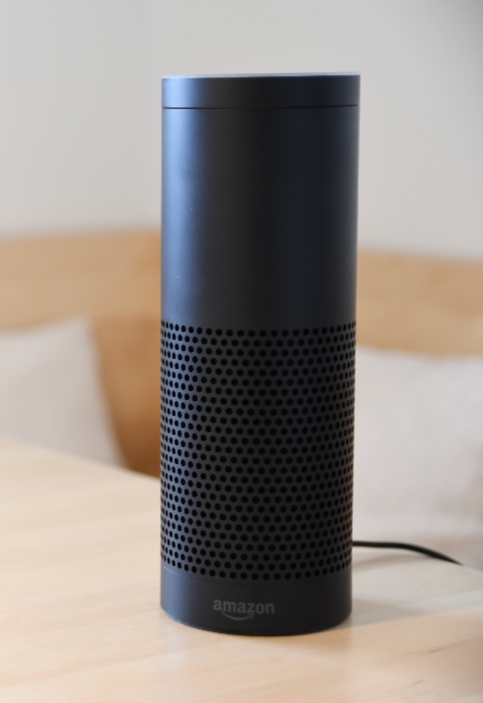
Now, almost all people have virtual assistants in their homes. Amazon Echo virtual assistant, Alexa, is one of the best examples of this technology. This IoT device is capable of creating to-do lists, playing songs, making phone calls, and ordering items online. 


It performs your requests by responding to your voice commands. It can also set reminders, make appointments, and manage house instruments. As automation and connection continues to increase, the amount of data available for gathering by such assistants has also increased to a great extent. 


  • Samsung Gearfit


Although there are many wearable fitness trackers, this is one example of such devices. This IoT device tracks your calories burned, counts your steps, and also calculates distance walked or run. It integrates with Samsung's Health app. Such wearables are synced wirelessly to a mobile phone for tracking data regarding your fitness.


  • Smart Farming Equipment


This device helps farmers do precise farming that leads to optimized production. IoT devices such as Smart Elements and Pynco detect and analyze the environmental data. These devices report weather conditions that help determine the best time to harvest plants. IoT-enabled farming assists farmers in gaining complete information about fertilizer profiles. Smart farming equipment helps farmers enhance their productivity. 


  • Connected Home Appliances


From connected home bulbs, air conditioners, water heaters to intelligent ovens, dryers, and smart thermostats, all home appliances are now connected. Users can control their home appliances and receive notifications and alerts on their smartphones. Automation and connection is a better way to make your house a smart house. 


  • IoT tracking system: Atrack trackers


A lot of businesses are now relying on industrial IoT devices. Atrack trackers is one example of such industrial devices. Businesses are using this device for tracking their assets. It offers GPS tracking that tracks or monitors assets and vehicles. It focuses on the transportation and logistics industries. This IoT device has changed the business landscape to a great extent.


What is the future of IoT?


The possibilities of the Internet of Things in different industries are endless. People are now getting attracted to this technology more and more. With how fast IoT is growing today, it is expected that an incredible wave of IoT applications will emerge in the future. It will be the foremost technology in coming decades. Adoption of IoT across various industries will witness a huge rise. 


Experts are expecting an increase in the number of IoT devices in the near future. More than 22 billion IoT devices will be in use by 2025. Cities, houses, companies, industries-- everything will become smart. The future world will be filled with smart things. Cases of cybercrimes and attacks will also grow due to the rise of IoT. This technology will be seemingly incorporated into all aspects of our lives. Undoubtedly, the futuristic vision of IoT holds the potential of taking the world by storm.


Wrap-up


The evolution of IoT technology has brought some of the major changes to our daily lives. From homes to industries, the Internet of Things is connecting everything digitally. IoT devices have made the world smarter than ever. Keeping in mind the growing use of IoT both in the workplace and outside of it, it can be rightly said that now nothing seems to stop the rise of IoT.


Do you think the Internet of Things has brought the world from offline to online? Let us know in the comments section below!


Sunday, July 26, 2020

The World of Thinking Machines: Artificial Intelligence

Have you ever wondered what would your life be like if you never had to do mundane chores again? Is it possible that machines can outperform humans at all tasks? Can machines become more intelligent than humans? Well, these questions must have come to your mind sometime.


However, it seems hard to say whether machines will surpass human intelligence or not. But, the term 'Artificial Intelligence' holds the potential to make such things possible. This term has gained enormous popularity in the past few years.


So without further ado, let's first understand the meaning of Artificial Intelligence.


What is Artificial Intelligence?


Artificial Intelligence or AI is a branch of computer science which creates expert systems that understand, learn, demonstrate, and behave like humans. AI implements human intelligence in machines. It enables machines to carry out the tasks that humans do.


In other words, artificial intelligence is a way of making intelligent and smart human-like machines. It programs a computer, or a software in such a way that it can think in a similar manner as humans think.


A brief history of AI 


The term "artificial intelligence" was coined by John McCarthy in the year 1956. He first introduced this term at an academic conference held in Dartmouth College in New Hampshire. 


Now, let's dig deeper to have more insight about Artificial Intelligence.


Applications of Artificial Intelligence


Following are some fields where AI is applied:


  • Healthcare


AI has a remarkable role in healthcare. Nowadays, various medical care centres or hospitals are relying on AI. With AI, diagnosing diseases has become more accurate. It analyzes samples with ease and also designs treatment plans. Now, researchers are implementing this technology to create drugs and vaccines. AI computational models help fight many diseases. Undoubtedly, AI in healthcare is helping doctors and patients all over the world. 


  • Virtual Assistants or Chatbots


Virtual assistants are evolving quickly and integrating into our lives. Now, all the android devices have Google assistants that can respond to voice commands. They understand and perform requests by using speech recognition and natural language processing technologies. Virtual assistants can perform several tasks such as internet searches, set reminders, get directions, search restaurants, and hear weather reports or news. Cortana and Siri are other examples of such applications available in Microsoft and Apple devices respectively. 


Moreover, Amazon Echo virtual assistant, Alexa, has gained a lot of popularity in the past few years. You only have to call out the word "alexa" and the device will be ready to answer your questions. It can create to-do lists, play songs, order items online, make appointment reminders, and so on.


  • Autonomous Vehicles


The development of autonomous vehicles is considered as one of the biggest achievements of AI. However, fully autonomous vehicles are not developed yet. But AI experts are trying to build them soon. 


Self-driving vehicles have AI-based features that find the quickest route by eliminating traffic conditions. Some more features include, self-parking, directing vehicles to petrol pumps in case of low fuel, natural language processing to interact with passengers, etc. AI in transportation is beneficial as it provides a safe and reliable journey. It also reduces energy and wastage of time.


  • Banking 


Now, banks are turning to AI to secure their data and prevent frauds. They are adopting AI technology that is assisting them in analyzing and detecting fraudulent transactions. AI-based systems can collect and store a vast amount of data in banks in an efficient manner. It enables banks to provide better services to their customers.


  • Astronomy


AI plays a pivotal role in astronomy. People are using this technology for space exploration. AI-enabled systems help discover and commercialize space with ease. AI easily analyzes the images captured by satellites within a few seconds. It is also used to navigate satellites and other spacecraft. Furthermore, keeping spacecraft and satellites operational has become effortless with this technology. AI also controls satellite communication and monitors craft health.


Is AI a boon or a bane?


There are some people who have a positive view and believe that AI is beneficial. On the other hand, a different set of minds takes a negative view and believes that it is dangerous. However, it's a never-ending debate and reaching a conclusion is difficult. But, I'll walk you through some pros and cons of AI. Let's see which view outweighs the other.


AI: a boon


• AI performs tiresome tasks and works continuously that helps us reduce burden.

• It enhances productivity of organizations and also strengthens the economy. AI has helped increase the global GDP which is contributing to the world's economy.

• Now, everyone has become habitual of using GPS for navigation. It also reduces the chances of getting trapped in traffic. 

• AI has made our daily lives more comfortable and fast. Virtual assistants are fulfilling our needs and providing a great value to the users.

• It is a multitasker and functions faster than humans. Machines are capable of solving complex technological problems that humans fail to do.

• AI will not destroy jobs. Instead, it will create more jobs in the future. The implementation of AI will provide new roles to humans. 


AI: a bane


• There are several risks posed by AI. AI can be devastating. If given in wrong hands, it can lead to mass casualties.

• Maintenance of machines costs huge amounts of money. So, AI implementation is costly.

• Although AI can create jobs, humans will have to upgrade their skills to not let machines outsmart them.


What is the future of AI?


AI is moving forward at a fast pace and looks unstoppable. With how fast it is integrating in our lives today, the future world will be changed forever. In the future, AI will provide even better applications or services. Machines will become a companion of upcoming generations. Virtual assistants will become more advanced and smarter than ever. Robots will completely take our places to perform tasks. AI systems will make rational decisions for us. There will be a tiring war between human intelligence and artificial intelligence. AI will also give rise to some new fields in the area of science and technology. Needless to say, this technology is well-positioned for decades to come.


Conclusion


We are heading toward becoming a technologically driven world, and AI is giving a contribution. Understanding the present state of AI, everyone is embracing the changes it is bringing in today's world. AI is transforming human life and we are yet to discover its potential in the long-term.


Do you think human intelligence will face an existential crisis due to AI? Let us know in the comments section below!


Sunday, July 19, 2020

Technology in the New Normal

While the Covid-19 pandemic has turned our lives upside down, people seem to be keeping up with the "new normal" this pandemic has brought forth. The whole concept of this new normal is, undoubtedly, new for all of us. Even though people may feel reluctant to adapt to the new reality, stepping into the "new normal" world is the only option left in the fight against coronavirus.


The three-month nationwide lockdown forced everyone to stay indoors. So, how did you spend your time during lockdown? Well I guess, some of you might have turned to social media platforms, scrolling endlessly through Instagram, then Facebook, and then a quick look at Twitter. And others might have taken it as an opportunity to binge-watch all those web series or movies that have been on their wishlist for a long time. So all in all, the technological innovations have been a constant saviour for us during these difficult times. Had it not been for technology, spending time in lockdown would have become difficult to some extent.


The lockdown has completely changed the way we live. In a matter of days, all of us have gone digital. From meetings to lectures, shopping to dating, everything has moved online. Needless to say, digitalization has become an integral part of our lives.


Now, let's have a quick look at the impact of Covid-19 pandemic on technology.


Impact of Covid-19 Pandemic on Technology


Ever since the lockdown imposed to curb the spread of coronavirus, the consumption of technology has increased. Remote working and work from home have become the "new normal" for millennials. Apart from work, people are using technology for personal activities like, listening to music, streaming shows, etc. Streaming has become more popular than ever.


The pandemic has changed the real world interactions into virtual interactions. Gone are the days when we would hangout with friends or do get-togethers at relatives' house. Now, families are connecting with each other through video calling apps. The concept of video calling has always been there but its usage has witnessed a sudden spike.


With people forced to stay at their homes, social media platforms seem to be the only place where they can communicate well. Sharing pictures, videos, or memes, and updating followers by posting content daily-- social media activity is growing at a fast pace and is expected to grow even more owing to the new normal concept.


Several people are relying on a variety of mobile apps for things ranging from gaming, studying, shopping, to banking. Use of fitness apps by gym freaks has gone up. Now, virtual training is a new trend. Also, the Covid-19 tracing app, Aarogya Setu, has emerged as a helping app recently. The coronavirus pandemic has caused much strain on internet traffic. Meanwhile, Netflix, Amazon prime, Youtube have reduced their video quality to prevent overload.


Now, most of us are glued to our smartphones. What else can we do? Playing outside, shopping, meeting, hanging out-- everything seems impossible, at least for some time in the near future.


Role of Technology in the New Normal


The role of technology in the "new normal" across different industries is as follows:


  • Business


In the past few months, how many times have you heard of the term-- Work From Home (WFH)? Several times, right? So, how is this WFH concept possible? Is it not because of the fact that we have access to laptops, computers, and smartphones? Yes, businesses are staying afloat with the help of technological innovations. Now, companies have learnt new ways to manage this crisis. Those companies that have never considered this work from home concept are now relying on it. In an attempt to contain the spread of the virus, meetings are now held virtually. Video conferencing apps like Zoom and Google Meet have helped employees interact effectively. 


Continuity is like a lifeline for business. But, the pandemic has affected every workplace across the globe. It is only technology that is enabling them to work and collaborate remotely. If remote working continues to be the new norm, then technology will accompany businesses for their smooth running. Companies are reaping many benefits of technology during the Covid-19 crisis.


  • Education


The pandemic has brought the education sector to a sudden halt. It has forced all the schools and universities across the world to suspend physical classrooms. While offline education is not feasible now, adopting technology-based education is the only alternative. Now, educational institutes are replacing physical classrooms with an online mode of learning and teaching. They are using digital platforms to make education delivery possible. So, teachers and students have to get used to this new normal. 


Some of the Edtech companies such as Byju's, Vedantu, & Unacademy have come up with their educational apps that are helping students continue their learning during the pandemic. Google classroom seems to be the future of physical classrooms. 


Technology has ensured that learning remains a continuous process. Using technology in education is not new, but it has significantly transformed the traditional education system.

Virtual education will be a part of the "new normal" in the post-Covid world.


  • Health care


The application of technology to fight the coronavirus disease is on rise these days. People are adopting digital health technologies more and more. Since coronavirus cases continue to rise, testing and contact tracing has become essential. For this, healthcare workers are integrating digital technology into containment and mitigation processes. 


Several healthcare systems are using self-prioritizing mobile apps to help people check their symptoms. As mentioned above, Aarogya Setu app is also helping users minimize their chances of getting an infection. 


Screening, diagnosing, and treating patients-- everything needs technological tools. Digital thermometers, telemedicine platforms, etc. are some examples of technological tools that have been deployed on a huge scale. The dependence on digital health technologies is increasing at a fast pace. 


Conclusion


The pandemic will have a long lasting impact on the world. Although, this is a traumatic time for everyone, we have to prepare ourselves for a different world in the coming future. The "new normal" concept is not going to leave us soon. But, technology is here to help us. The Covid-19 outbreak has shown how important technology can be in times of uncertainty. 


What do you think about the "new normal" concept? Let us know in the comments section below!


Sunday, July 12, 2020

Know the World of Information Technology


What is the first thing that came to your mind when you read the term "Information Technology? Maybe-- computer, internet, software, web applications or above all- it's boring! But if you ask any tech-savvy person, this term holds the potential of serving as a big change agent in today's technological world.


So without further ado, let's explore the world of information technology.


What is Information Technology?


Information Technology (IT) refers to the study, use or management of computer-related information systems. IT covers all forms of technology used for creating, processing, securing, retrieving, and exchanging information or electronic data.


The term Information Technology was first coined in a Harvard Business Review article in the year 1958.


IT is used in different aspects of organizations or companies to solve their problems related to handling information or data on a broad scale. IT implements computer networks and includes all software, hardware, and peripheral devices for communication and data processing.


Let's dig deeper to have more insight about Information Technology.


Emerging Trends in Information Technology


  • Cloud Computing


Cloud computing is one of the methods of delivering IT services, wherein, resources are recovered from the internet via web-based tools and applications. 


Cloud-based storage saves files to a remote database. It enables employees to work remotely and access all the data via the internet. Moreover, cloud computing offers three types of services, Infrastructure as a Service (IaaS), Software as a Service (SaaS), and Platform as a Service (PaaS). 


  • E-commerce


E-commerce or electronic commerce is a type of trading which is done electronically. It refers to the process of buying or selling goods or services via the internet. Here, the internet is the only electronic medium or network to do transactions. 


Some of the world's leading e-commerce websites are, Amazon, Flipkart, Walmart, eBay, etc. Undoubtedly, e-commerce has changed the way people shop and do business.


  • Artificial Intelligence (AI) 


Technology has advanced to such an extent that now it is capable of learning about the world just like humans. Artificial Intelligence makes it possible for machines to perform human-like tasks. Now, software can think in the same manner as humans think. Thanks to AI.


It creates systems that can comprehend, learn, think, and behave like humans. With how fast this technology is growing, it will soon overtake most of the human tasks.


  • Database Management


A database is an organized collection of data or information which is structured for instant search and retrieval by a computer.


Database Management software allows users to define, create, and manipulate databases with ease. It also helps in sharing, protecting, and maintaining databases. It is a critical element of today's software industry to solve the problems of managing huge amounts of data.


  • Internet of Things (IoT)


Internet of Things (IoT) refers to the network of physical devices that connect, share, or exchange data over the internet. Such devices use sensors and APIs (Application Programming Interface) that enable them to communicate real-time data without any human intervention. Physical devices such as, machines, home appliances, vehicles, commercial security systems, etc. are some examples of the IoT devices. 


Now, there are many IoT devices available that are making great changes in the IT industry. The IoT technology is evolving rapidly. It will fill our lives and this world with smart things.


Uses of Information Technology in an Organization


Some of the uses of information technology in an organization are as follows:


  • Communication


In an organization, communication plays a vital role in building good relations among employees, managers, and customers. Some of the services like email, video chat rooms, etc. make communication within and outside the organization easy. Moreover, it simplifies the decision making process for employees and managers. Communication is a great tool for business development.


  • Transaction Processing


Information technology eases the transaction process of an organization. The Transaction Processing System (TPS) monitors, processes, and secures information of day-to-day business transactions. It provides routine reports like profit and loss a/c and balance sheets, etc. TPS stores information in a database that can be accessed any time through an information storage network on the internet. 


  • Management Information System (MIS) 


Generating and communicating information, identifying the problem, and decision making are crucial for organizations. MIS assists in making strategic planning and improving organizational techniques. It meets informational needs of the management people and other users in a business. MIS helps make effective decisions for planning and controlling the business activities. 


  • Information Flow


Information is like a secret weapon for all organizations. It describes a lot about an organization such as the environment surrounding it, or something that is currently known or unknown. Efficient and secure flow of information is an essential factor in the decision making process. With information technology, the flow of information has become an easier task. Now, all the data or information of a business can be retrieved using centralized data centres.


Importance of Information Technology in today's world


• Information Technology accounts in the development of the modern world. Now, it is almost impossible to imagine modern life without it.


• The incorporation of IT in education has made learning even more effective and qualitative. It has improved the teaching and learning methods. Now, students can have access to unlimited educational resources. It has significantly influenced the education system.


• IT has simplified the process of purchasing or selling goods. With IT, sending or receiving money has become a child's play.


• With the introduction of information technology, the corporate world has advanced to a great extent. IT is proving as a game changer in resolving various economic and organizational problems.


• Now, almost all parts of the world are connected together. Human civilization has expanded to remote areas as well. Thanks to IT.


Wrap-up


Information Technology (IT) has changed the face of the world that existed before. Today, we live in a world where new technologies are playing lead roles. The changing field of IT has made great progress in the past few years. With its growing use throughout the world, IT expects more advancements in the future.


What are your expectations for the advancement of Information Technology in the future? Let us know in the comments section below!